

Chennai, November 10, 2026: MGM Cancer Institute successfully treated a 55-year-old man whose persistent back pain & numbness of leg led to the diagnosis of a vascular retrosternal thyroid cancer that had spread to the spine. Less than 1% of all thyroid cancer patients worldwide are reported to present upfront with this condition.
The patient was admitted with back pain lasting several weeks, along with weakness in the lower limbs. Evaluation revealed a vascular tumour (with an extensive network of blood vessels) on the thoracic vertebrae compressing the spinal cord, causing the symptoms. Further, the team found that the tumour pressing on the spinal cord was a secondary (metastatic) mass that spread from a primary thyroid gland cancer with a retrosternal extension.
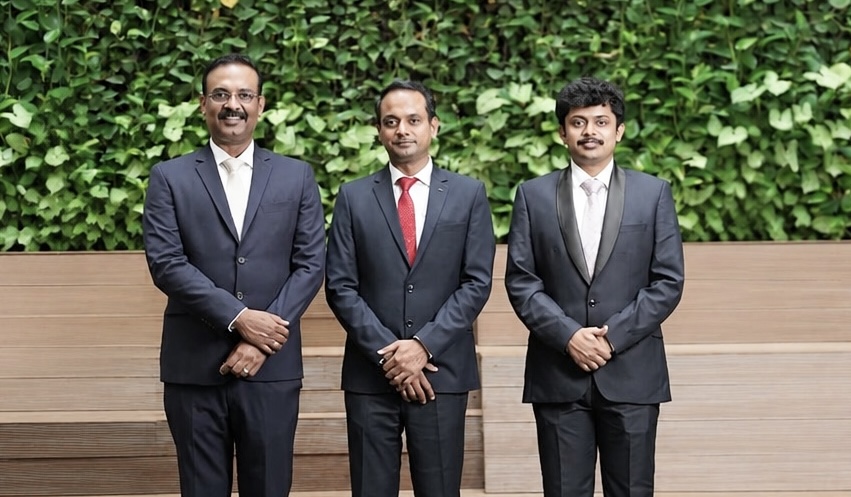
The medical team, led by Dr. S. Srivishnu, Consultant, Surgical Oncology, and Dr. G. Vijayaraghavan, Senior Consultant, Spine Surgery, performed two major surgical procedures. The first was a total thyroidectomy to remove the entire thyroid gland, along with clearance of potentially affected lymph nodes. The second was a D2–D5 thoracic laminectomy with stabilisation. The back portion (lamina) of the second to fifth thoracic vertebrae was removed to relieve pressure on the spinal cord, and the spine was then stabilised with implants. Decompressing the spinal cord helped protect neurological function and relieve symptoms.
Dr. Sivaram Ganesamoni, HOD and Senior Consultant, Surgical Oncology, said, “Treating a highly vascular retrosternal thyroid cancer that had spread to the spine and was threatening paralysis of the lower limbs required precise coordination between surgical oncology and spine surgery. Meticulous planning and teamwork made the difference. Prompt diagnosis and timely decompression helped prevent irreversible neurological damage and significantly improved the surgical outcome. “In men, thyroid cancer often tends to be diagnosed at a more advanced stage. When the gland grows downward into the chest, it may produce no visible swelling or symptoms in the neck.”
Dr. S. Srivishnu said, “The case presented significant surgical challenges. The tumour’s extensive vascularity increased the risk of bleeding during surgery, and the retrosternal extension of the thyroid gland further complicated surgical access and tumour removal. Careful surgical planning and a combined multidisciplinary approach were crucial in managing these complexities and ensuring the best possible outcome for the patient.”
Dr. G. Vijayaraghavan said, “The cancer had spread to the vertebral bones, putting the spinal cord at risk, which could have led to permanent paralysis and loss of bladder control. The primary objective of the surgery was to decompress the spinal cord, relieve the pressure caused by the tumour, and stabilise the spine with implants. Timely surgical intervention was critical to preserving neurological function and preventing irreversible complications.”
Following the eight-hour surgery, the patient is stable and recovering well. He was discharged on the third day after surgery. He will next undergo radioiodine therapy, which the total thyroidectomy makes possible, to treat the remaining cancer in the spine.
About Author



More Stories
Dr. Mohan’s Centre and Hinduja Foundation Honour Long Term Survivors with Type 2 Diabetes and Academic Achievers with Type 1 Diabetes
SRM Prime Hospital Lights Up in Pink, Urges Women to Prioritise Breast Health
Kauvery Hospital Treats Complex Aortic Valve Regurgitation Using Specialised HANCHOR Valve Technology