

Chennai, 25th November 2026: In a landmark clinical achievement in minimally invasive gastroenterology, a team of surgeons at GEM Hospital, Chennai, led by Dr. P. Senthilnathan, has successfully removed massive pancreatic stones measuring up to 3 cm entirely through laparoscopic surgery. The 41-year-old male patient, who had been suffering from severe, recurring abdominal pain radiating to his back for over six months, made a rapid recovery and was discharged within four days of the procedure.
The patient was diagnosed with Acute-on-Chronic Calcific Pancreatitis (CCP) accompanied by pancreatic diabetes (Type 3c DM). Advanced CECT imaging revealed a severely atrophic pancreas choked with dozens of stones including giant calculi measuring 3 x 1 cm lodged across the head, neck, and tail of the main pancreatic duct, as well as stones up to 2 x 2 cm trapped inside the minor duct.
While stones as small as 0.5 cm to 0.75 cm can trigger severe pain and require intervention, stones of this magnitude (2 to 3 cm) embedded across both the main and side ducts are exceptionally rare. Because these stones sit dangerously close to major blood vessels and must be extracted intact without fracturing or damaging surrounding tissue, such cases are almost universally managed through traditional open surgery.
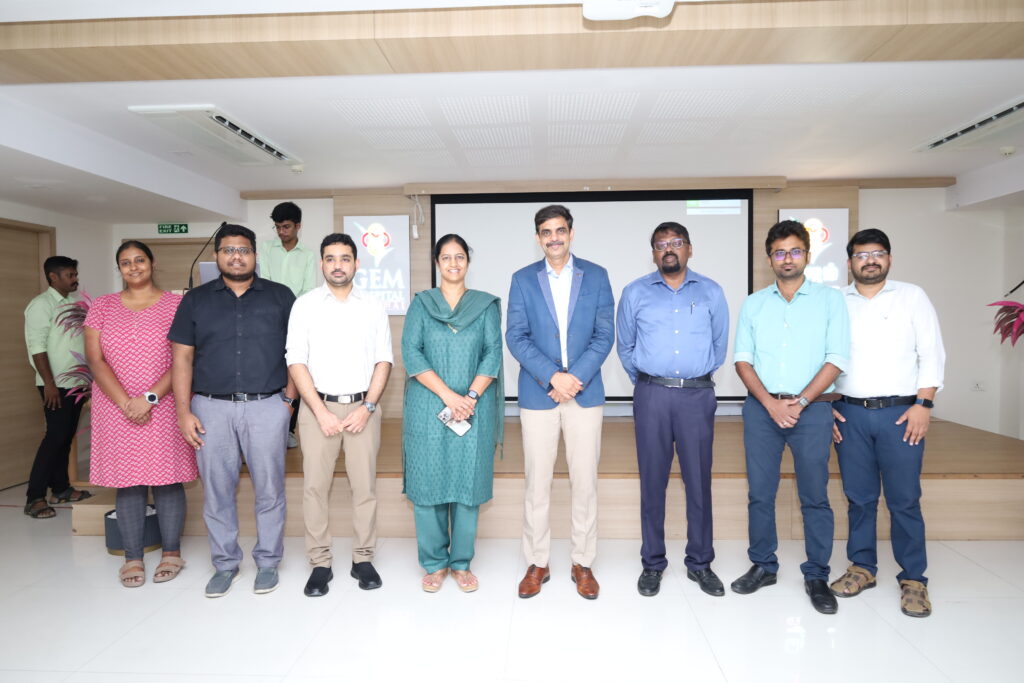
During the press briefing, where the extracted stones were displayed alongside surgical footage, Dr.P.Senthilnathan, Surgical Gastroenterologist & Director, GEM Hospital highlighted the clinical significance of the breakthrough and said, “In chronic calcific pancreatitis, stones accumulate in the central duct and cause severe blockages, excruciating pain, and secondary diabetes. If left untreated, chronic inflammation can even increase the risk of pancreatic cancer. While smaller stones can be managed medically or endoscopically, large stones require surgery. Removing 2 to 3 cm stones lodged from the head to the tail of the pancreas laparoscopically is extraordinarily rare and technically demanding, as we must carefully separate them from critical blood vessels and extract them intact without breaking them.”
“Had we opted for conventional open surgery, the patient would have faced a large abdominal incision, significant post-operative pain, and a prolonged hospital stay. Through precision laparoscopy, we cleared the entire stone burden with no large cuts and no stitches to remove. Today, the patient is completely pain-free, requires no pain medications, and only needs routine management for his blood sugar”, Dr.Senthilnathan further added.
Commenting on the evolving disease burden and advancements in pancreatic care, Dr. C. Palanivelu, Founder and Chairman, GEM Hospital said, “Over the past decade, we have seen a steady rise in complex pancreatic stone cases across India, increasingly affecting young and middle-aged adults in their thirties and forties. Shifting dietary habits, metabolic disorders, and delayed diagnosis are resulting in patients presenting with larger, multiple stones and secondary diabetes. The encouraging trend in modern gastroenterology, however, is that patients no longer have to endure years of painkillers or undergo traumatic open surgeries. Advanced laparoscopic techniques allow us to clear even giant, deeply lodged stones safely, preserve vital pancreatic function, and dramatically reduce the future risk of pancreatic cancer.”
About Author


More Stories
Prashanth Fertility Performs South India’s First Live Robotic Telesurgery for Myomectomy, Connecting Chennai and Moradabad
SRMIST Licenses Patented Polyherbal Anti-Diabetic Formulation to Dr. ShreeVarma’s Wellness
SRM Prime Hospital Becomes the First in the State to Introduce Next-Gen Lumenis Laser Tech for Advanced Urological Treatments