

Chennai
As schools focus on preparing students for a rapidly evolving world, educators are rethinking what constitutes student success. According to educators within the Cambridge system, physical wellbeing, resilience, confidence and healthy lifestyle habits are now recognised as essential components of a child’s overall development.
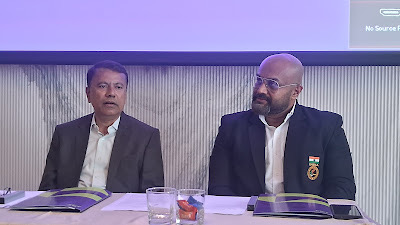
Speaking at a media interaction today, Dr. S. Prem Shankar, Chairman, Holy Sai Group of Institutions and President of the Tamil Nadu Association of Cambridge Schools, said that one of the defining strengths of the Cambridge curriculum is its commitment to develop the learners who are ready for the world.
“The Cambridge curriculum’s inquiry-based and learner-centred approach encourages critical thinking, creativity, collaboration and real-world problem-solving while nurturing lifelong learners. Cambridge develops not only academic excellence but also learner attributes such as being confident, responsible, reflective, innovative and engaged. These qualities help prepare students to become truly ready for the world,” he said.
Recent developments within the Cambridge framework have also strengthened the emphasis on learner wellbeing, active learning, future-ready competencies and the development of essential life skills.
This philosophy has shaped the approach adopted at Holy Sai, a Cambridge International School in Tamil Nadu, where student wellbeing is viewed as a core educational priority rather than an extracurricular consideration.
Physical development as a focus
Recognising the need for a more structured approach to physical development, the school recently introduced a comprehensive fitness assessment and monitoring programme designed to complement its existing sports ecosystem.
“Traditional sports programmes are valuable, but we believedthat a structured fitness programme would ensure that every student benefits from measurable fitness development, not just those involved in competitive sports. We, thus, brought in Mr. P. Naveen Howie, a gold medallist in shotput, discus and javelin disciplines, and his firm, Fittgen, to design a scientific fitness assessments programme for us at Holy Sai to help us focus on this aspect of fitness,” added Dr. S. Prem Shankar.
Since the programme’s introduction, the school has observed encouraging changes among students. They have become more fitness-conscious, active, disciplined and confident. They are developing a greater awareness of healthy lifestyle habits, and parents appreciate receiving meaningful insights into their child’s overall wellbeing in addition to academic progress.
Explaining the rationale of their programme, Mr. P. Naveen Howie, Co-founder and Managing Director of Fittgen, said that a big misconception in education is that participation in sports automatically translates into fitness. Schools encourage students to participate in sports, but the difference in Holy Sai is that it moves from a one-size-fits-all approach to a more informed and targeted fitness model. Activities are designed to be able to develop each student’s personalised development pathways.
“Sports are important, but true fitness encompasses strength, flexibility, endurance and movement competency. These areas need to be tracked and developed systematically if schools are to deliver meaningful long-term outcomes. In the programme that we are doing, students undergo age-appropriate fitness assessments, enabling schools to establish individual baselines and monitor progress over time,” he said.
A dedicated digital platform – Fittgen – is available to support the programme by providing schools, students and parents with clear and accessible fitness insights.
At Holy Sai International School, the programme has already helped foster a stronger culture of health and wellbeing.
“One of the most encouraging outcomes in Holy Sai has been the accelerated fitness outcomes as students are now more engaged with their own physical development for healthier lifestyle choices. This programme has been such a success in Holy Sai that I am recommending this to the other Cambridge schools in the Tamil Nadu to introduce comprehensive fitness assessment and monitoring programmes,“ said Dr. S. Prem Shankar.
With Tamil Nadu already recognised as a leader in educational innovation, stakeholders believe the state is well positioned to drive the adoption of evidence-based approaches that integrate academic excellence with student wellbeing.
About Author



More Stories
MRF Indian National Racing Challenge 2W Round 2 – Day 3
FICCI roadshow showcases Chhattisgarh to outside world
Parachute Advansed Unveils Three New Products Crafted for Tamil Nadu’s Evolving Haircare Needs