

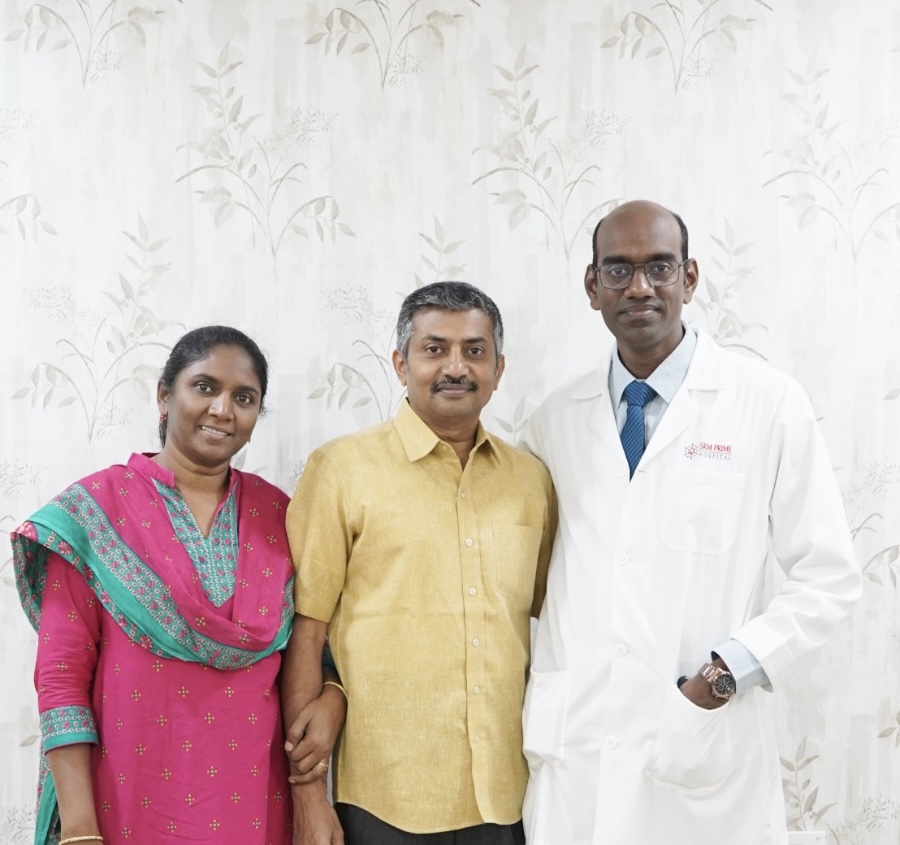
SRM Prime Hospital successfully saved a patient suffering from advanced colon cancer, a cancer that develops in the tissues of the colon, by performing advanced laparoscopic surgery in which the cancer affected portion of the sigmoid colon & upper rectum is carefully removed and the healthy ends of the bowel were then reconnected to maintain a natural passage for stools.
The challenge was further heightened by the patient’s refusal of blood products and intraoperative blood loss was limited to just 20 ml, and no blood products were used. He will continue with chemotherapy and regular follow-up care as part of his comprehensive cancer treatment plan. Post surgery, the patient is doing well and has returned to a healthier daily routine.
Colorectal cancer affects approximately 75,000 new patients annually in India, with risk factors including westernized diet, high red meat consumption, and hereditary predisposition.
However, with meticulous surgical planning and blood conservation strategies, the surgical team led by Dr. Senthil Kumar Ravichander, Clinical Lead & Senior Consultant, Surgical Oncology, SRM Prime Hospital, successfully performed the surgery without using any blood products.
The surgery was led by Dr. Senthil Kumar Ravichander, Clinical Lead & Senior Consultant, Surgical Oncology, SRM Prime Hospital. The surgical team performed a minimally invasive laparoscopic high anterior resection, entering through small abdominal incisions to remove the cancer-affected section of the sigmoid colon & upper rectum. The remaining healthy bowel was then rejoined to restore the normal passage for stools, all done using high definition 4K visualization & Infrared (IR) imaging and advanced instruments to allow precise dissection with very minimal blood loss, critical due to the patient’s refusal of blood transfusion.
In his comments, Dr. Senthil said, “We followed a strict, evidence-based blood conservation protocol which enabled us to perform the surgery without blood transfusions. It required meticulous surgical technique, precise anaesthetic management, and intensive care coordination between the anaesthesia, intensive care, and nursing teams.”
He further added, “Persistent bleeding during bowel movements especially if lasting more than 3 to 4 weeks should not be assumed to be haemorrhoids alone. Early evaluation including colonoscopy is strongly recommended to rule out colorectal cancer. Lifestyle measures such as increased intake of fruits and vegetables, reduced red meat consumption, maintaining healthy body weight, and regular exercise can help lower the risk of colorectal cancer”.
This case highlights how modern bloodless surgery techniques can be safely and effectively applied in major oncologic surgery for patients who decline blood transfusion due to their religious belief- a situation that traditionally posed significant clinical challenges.
About Author



More Stories
SIMS Hospital Saves 65-Year-Old Scholar Requiring Over 250 shocks with Advanced Electrophysiological Intervention After Repeat Bypass Surgery
Iswarya Hospital Opens Advanced Cancer Centre in Chennai
Dr. Mohan’s Diabetes Specialities Centre Launches Genomic Lifestyle Counselling (GLC) – Marking a New Era in Precision Medicine